

How a Derbyshire dairy has lifted milk from home-grown forage
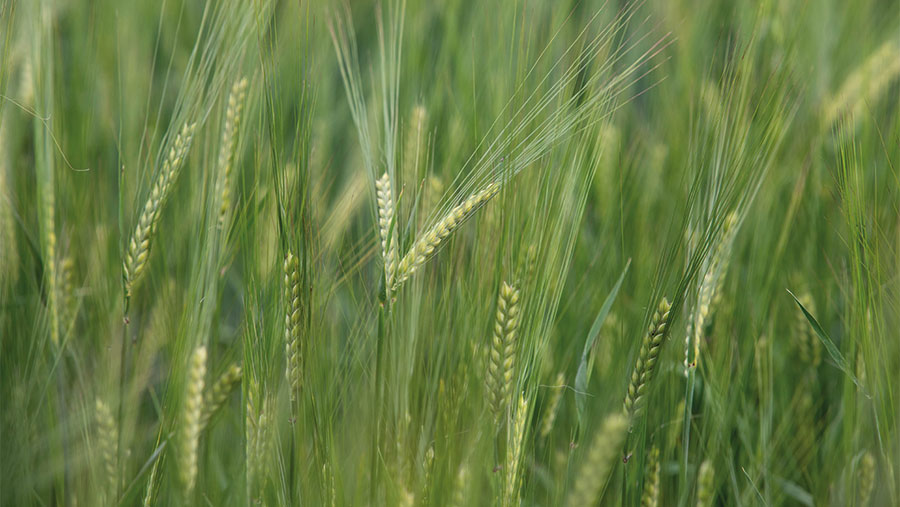 © Tim Scrivener
 Striving to produce more milk from home-grown forage is part of a wider ambition to reduce bought-in feed costs and improve business sustainability for the Dilks family.
Ross Dilks farms with his mother and father, Judy and Bob, milking 150 cross-bred cows on the Hassop Estate, near Bakewell.
See also: 5 practical ways to lift milk from forage
Their journey started eight years ago when they converted to organic production and shortly afterwards took on another tenanted farm, which made them rethink their goals.
“We realised we didn’t want to up numbers too much, but we had a surplus of land, so we decided to make the most from forage,” explains Ross.
Farm facts
- Home Farm is 134ha (330 acres) on a farm business tenancy (FBT)
- 69ha (170 acres) at Knouchley Farm on an FBT
- Milks 150 cross-bred cows, expanding to 200
- Spring-calving, moving to two blocks for year-round milk supply
- Yields 6,500 litres at 4.3% butterfat and 3.39% protein
- Sells organic milk to Arla/McDonald’s
- On-farm milk vending machine sells 50 litres daily
- Grows 20ha winter oats, 20ha arable silage, 60ha multispecies leys for cutting, 60ha multispecies leys for grazing, 40ha of permanent pasture
Over the past three years, the family have reseeded some 60ha (150acres), introduced multispecies leys and paddock grazing, and focused on producing high-quality forage using arable silage.
“Converting the cows wasn’t a problem, it was converting me to work in a different mindset,” says Bob.
Combined, these changes have helped lift milk from forage to 3,900 litres (nearly 50% of total yield).
Milk yield has dropped slightly, from 7,500 litres to 6,500 litres, but the Dilks say what they have lost in output they have gained by reducing feed costs.
“We were really buying milk in,” admits Bob, who credits the introduction of clover with helping them reduce protein supplementation.
Reseeding
Ross has spent much time honing the grass mix by trialling different mixes and reseeding policies.
He has settled on undersowing arable crops of winter oats, spring barley and spring oats with vetch or herbal leys.
Typically, arable crops will be down for two years. In the first year, winter oats are grown, and left as overwinter stubble.
In the second year, spring-sown oats are grown, and then in the third-year, spring barley is undersown with herbal leys. This offers greater flexibility, explains Ross.
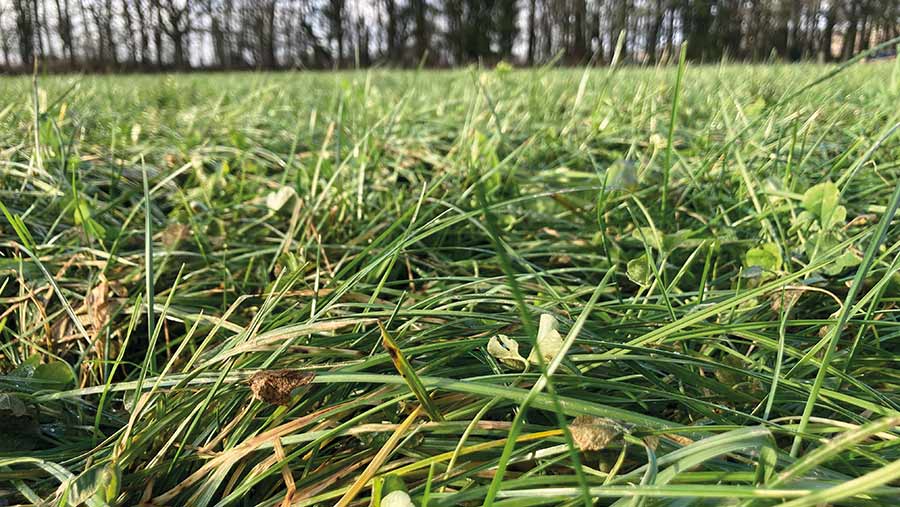
Herbal leys © Rhian Price
“Usually, winter oats are combined, but the rest is wholecropped unless we have a bad year for forage [when] the winter oats will be wholecropped as well.
“Oats are king. They are so competitive and are sown at 180kg/ha. Spring barley is combi-drilled and then grass is broadcast and everything is rolled.
“We sow spring barley at a reduced rate of 125kg/ha to let the grass get a bit more light and stop competition,” he says.
Grazing
Cows are rotationally grazed on 50ha (124 acres) from March until the weather permits (last year, cows were housed fully on 8 December).
On the grassland, multispecies leys will be used for five to six years and then winter oats will be sown as a one-year break crop before the land is put back into grass.
Typically, this will be wholecropped in July and reseeded to avoid losing a year of production.
Grass is ploughed or rotavated to add organic matter to the soil. Grass after wholecrop will be direct-drilled before August – the cutoff date for reseeds, as the temperature drops after this.
Slurry is applied by contractors using a dribble bar.
Custom grassland mixes are chosen for good yields, with Ross opting for five species of grass – timothy, festulolium, hybrid ryegrass, perennial ryegrass, and fescue – with red and white clover and three species of herbs, usually chicory, plantain and yarrow.
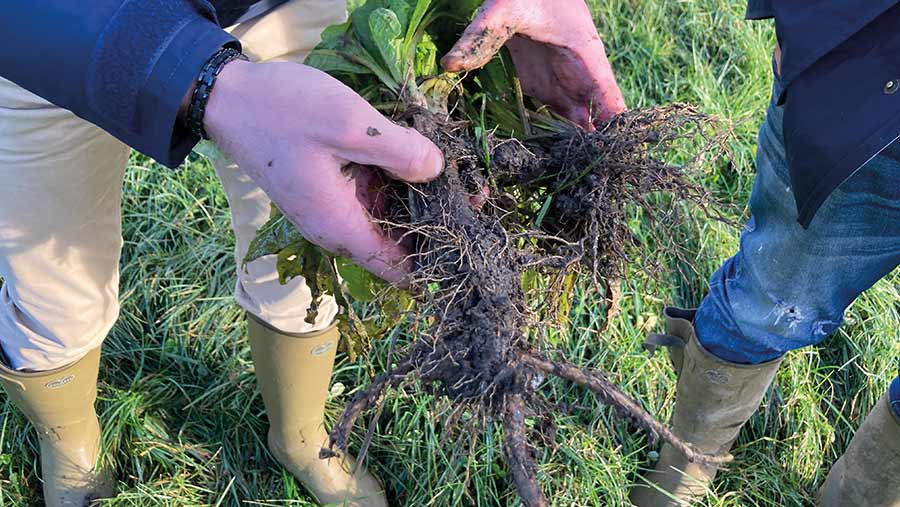
Chicory © Rhian Price
“I avoid cocksfoot like the plague because it is a coarse grass.
“Before, I used to select white clovers for the grazing leys, but now we use red and white in both [arable and grazing leys] because we find they keep growing in drier summer months and improve fertility,” he says.
Silage is harvested with a forage box and layered in the clamp. The aim is to take four cuts each year, although this year they fell short of this because of the drought.
Winter feeding is kept simple, with cows fed two-thirds silage and one-third arable silage, and bales or blocks from the clamp put out using a grab.
An 18% cake is fed to yield in the parlour, with youngstock offered straw, haylage and oats and cake. Dry cows and in-calf heifers are given baled silage or haylage.
Drought
Last summer, the Dilks managed to keep the cows at grass, although they had to supplement with silage from July until the end of August.
Typically, the cows are moved on a 20-30-day rotation, but during the drought this was extended to 40 days to allow the grass more time to recover.
They brought in another 10ha (25 acres) of silage ground to graze.
During the summer drought there was a noticeable difference in the reseeds, which tended to keep growing while the permanent pasture halted, says Ross.
To help boost the productivity of permanent pasture he has dabbled with some overseeding, but admits he has not had much success.
“Last year we overseeded 12ha (30 acres) with perennial ryegrass and white clover. We grazed it tight, harrowed and overseeded with a tine and flat-rolled, but only got 30% take.”
He plans to try with faster growing Italian ryegrass that will get going quicker in the season and can outcompete other species.
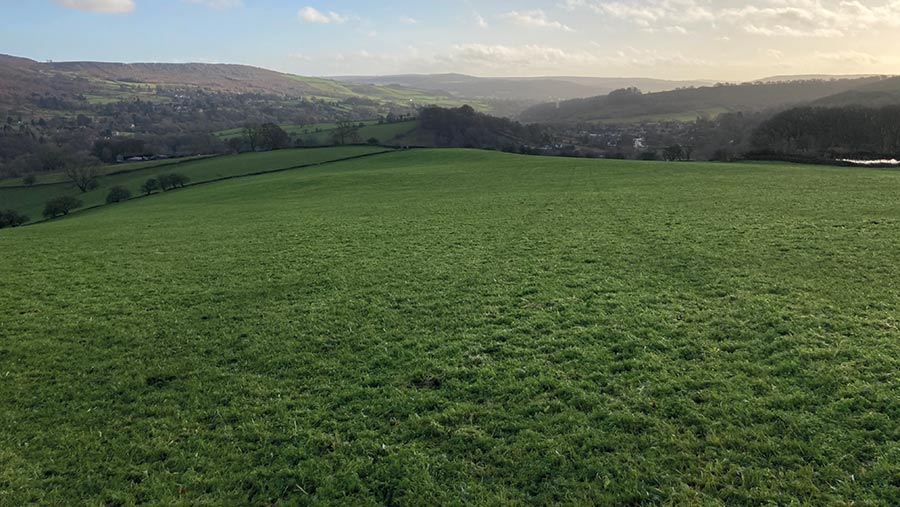
Permanent pasture at Knouchley Farm © Rhian Price
Future
The Dilks are now considering moving to once-a-day (OAD) milking to simplify management further and bring a 16ha (40-acre) block into the grassland platform to act as a buffer from dry seasons.
As this block is 2km away from the parlour, OAD milking seems a logical move, says Ross. Although this will lower milk yield, the target is to increase milk from forage further and continue to reduce costs.